
Starzl EW
Compresses IQ at the edge, classifies emitters, and moves the result when the link can't carry the raw capture.
Unlock the full potential of your platforms and mission capabilities
Raw IQ is hard to compress. Typical lossless methods only get you about 1.2×–2×. We get you 6–42× perceptually lossless, or >150× mission specific.
A 100 MHz capture is about 3.2 Gbps. That's roughly 24 GB a minute, which is expensive to store and usually impossible to backhaul.
So the real limit is not collection. It's getting a usable picture off the sensor when the network is slow or down.
If you keep the raw IQ, you pay for bandwidth and storage. If you process at the edge, you have to keep enough of the signal that you can still identify emitters later.
Written in Rust. Runs on CPU and FPGA.
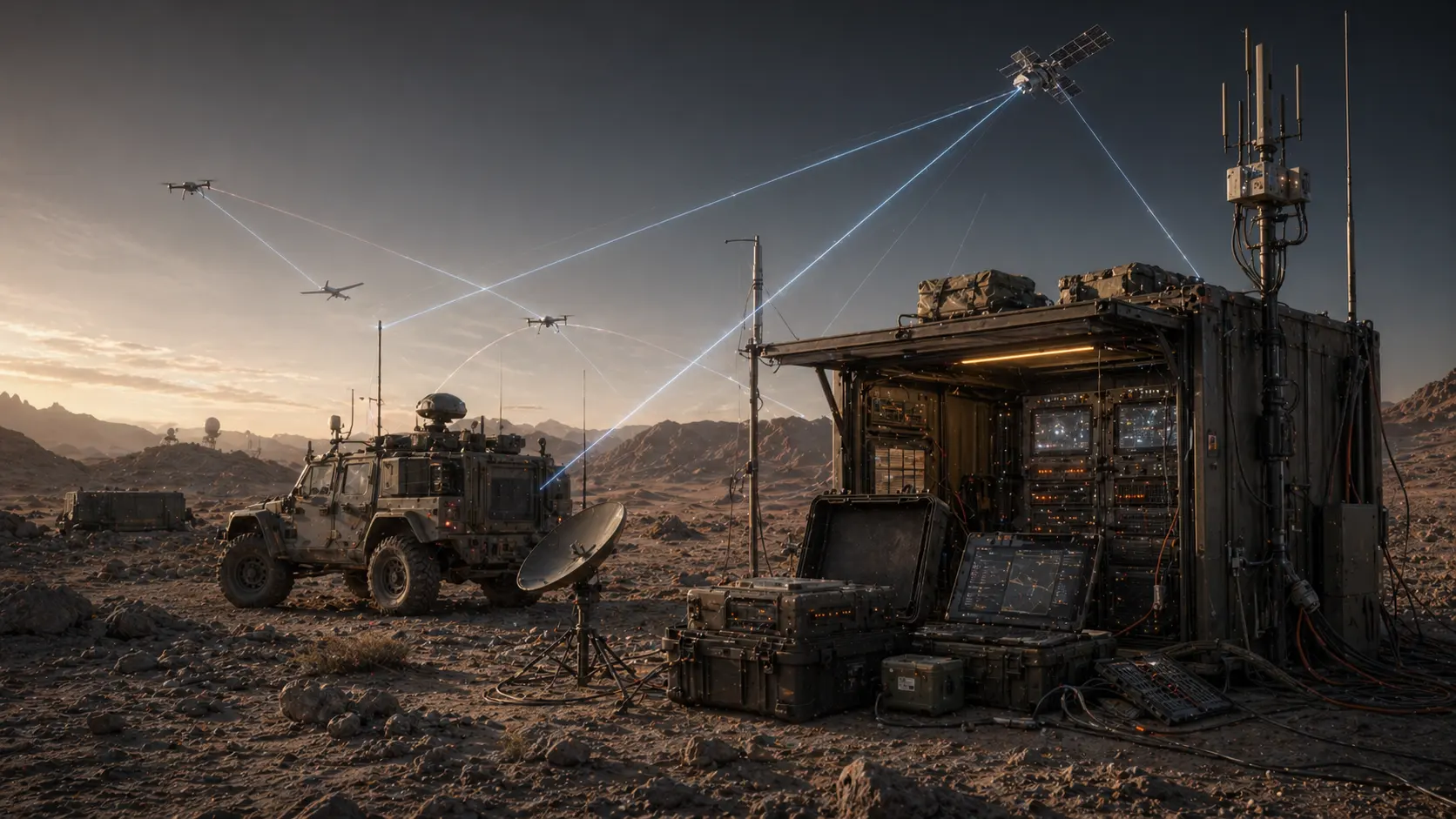
Starzl EW is a modular signal-processing stack written in Rust. It runs on CPU and FPGA. No GPU, no training step, and a small memory footprint. It's meant to sit on hardware you can already buy.
It compresses IQ, extracts emitter signatures, classifies signal characteristics, and encrypts the stream. It can also hand off to PNT, a jam-resistant link, and fleet management.
Layered Architecture
The stack is split into layers, the same way a network stack is. Each layer has a job and a named component.
| Layer | Function | Component |
|---|---|---|
| 4 — Fusion & Effects | Sensor fleet orchestration and effects delivery | Odin (orchestration) & Mjolnir (effects) |
| 3 — Positioning & Navigation | Passive PNT and emitter localization | Starzl PNT |
| 2 — Signal Processing | Compression, classification, encryption | Starzl EW core |
| 1 — Network Transport | Jam-resistant RF link | Bifrost |
The layers share APIs and form factors so work at one layer can move up or down without a redesign.
Specs
| Capability | Metric |
|---|---|
| IQ Compression | 8×–42× perceptually lossless; ~750× average mission-specific low-loss |
| Processing Rate | 50+ Ms/s, bound by I/O interfaces |
| Emitter Fingerprint | 2 KB fingerprint, up to modulator-level identification |
| Modulation Classification | 95.2% accuracy, 14 classes (FSK/PSK/QAM/OFDM/chirp), 1M-sample |
| Waveform & Pulse Detection | 95.8% (burst/continuous/hop, pulsed-vs-CW) |
| Classification Engine | 46 ms, pure-Rust, signed cartridge, bit-exact to reference |
| Cross-Day Emitter Recognition | 0.919 top-1, 0.997 top-5 (OSU LoRa, 25 devices, multi-day) |
| Honest Abstention | 0.82 known emitter ID, novel emitters held out — not mislabeled |
| Field Learning | First-time unknown cataloged → next-day re-ID 1.000 |
| AES-CPE Encryption | IND-CPA provable; 1-bit key change diffuses >75% of positions; AES-256 floor |
| Bifrost Jam Margin | +15–25 dB vs. typical adaptive OFDM C2 links |
| Bifrost Effective Gain | 5–100× for structured C2/telemetry |
| Bifrost Adaptation | 10–100 ms downgrade and adaptation interval |
| Odin Orchestration | Distributed RF sensor fleet management, ATAK-style COP, brokered command |
One encode at the edge keeps emitter identity. Unknown radios stay unknown instead of getting a wrong label, and the catalog gets better when the same radio shows up again.
Processing chain
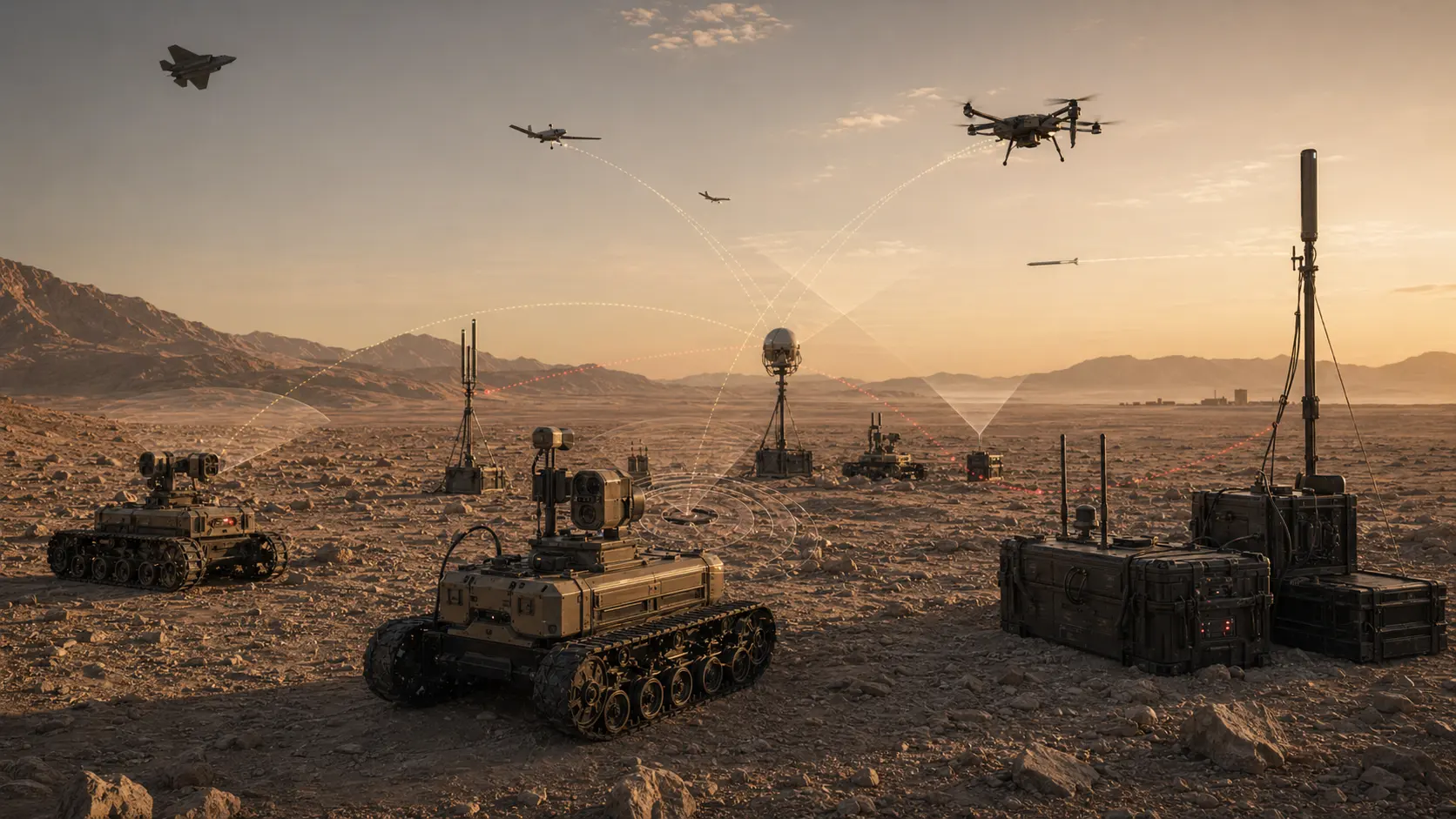
Typical path: capture, compress, fingerprint, classify, encrypt, transport, then manage the sensors.
Wideband IQ at up to 100 MHz bandwidth. Raw rate ~3.2 Gbps.
8×–42× perceptually lossless. ~750× average mission-specific low-loss. Processing rate 50+ Ms/s, bound by I/O.
2 KB emitter fingerprint extracted at the edge. Up to modulator-level identification. Provenance stamped on every identification.
Modulation classification at 95.2% across 14 classes (FSK/PSK/QAM/OFDM/chirp). Waveform and pulse detection at 95.8%. Classification engine runs in 46 ms.
AES-CPE encrypts each IQ sample on the constellation. AES-256 floor. IND-CPA provable. 1-bit key change diffuses across >75% of positions.
Bifrost moves compressed data over a jammed or degraded link. +15–25 dB jam margin vs. typical adaptive OFDM C2 links. 5–100× effective gain for structured C2/telemetry. 10–100 ms adaptation interval.
Odin manages the distributed sensor fleet. ATAK-style common operating picture. Brokered command channels. Edge collection bridged to backend graph state, storage, and analyst workflows.
Unknown Emitter Handling
Radios that aren't in the catalog come back as "unknown" instead of a guess. A first-time unknown is stored, clustered, and recognized the next time it appears. Next-day re-ID on that path has been 1.000.
Validation
Wideband captures, varied terrain
ValidatedWideband and narrowband, varied terrain
ValidatedELINT intercept, acoustic and radar
ValidatedRelated work
GPS-free navigation, adversarial AI, and operator training.
Position and timing from ambient RF. No GPS, no transmissions. Same feed maps nearby emitters.
Starzl PNT →The same listen-only feed catalogs transmitters: who they are, where they sit, and how they move.
Starzl PNT →Red-team tools for models and networks. The same stack is used on infrastructure defense.
Starzl Adversarial AI →Multi-day courses on AI, cyber, and OSINT. The skills stay useful when the software changes.
Starzl Operator Training →If you want to talk through a use case
Formerly fielded as Quicksilver.