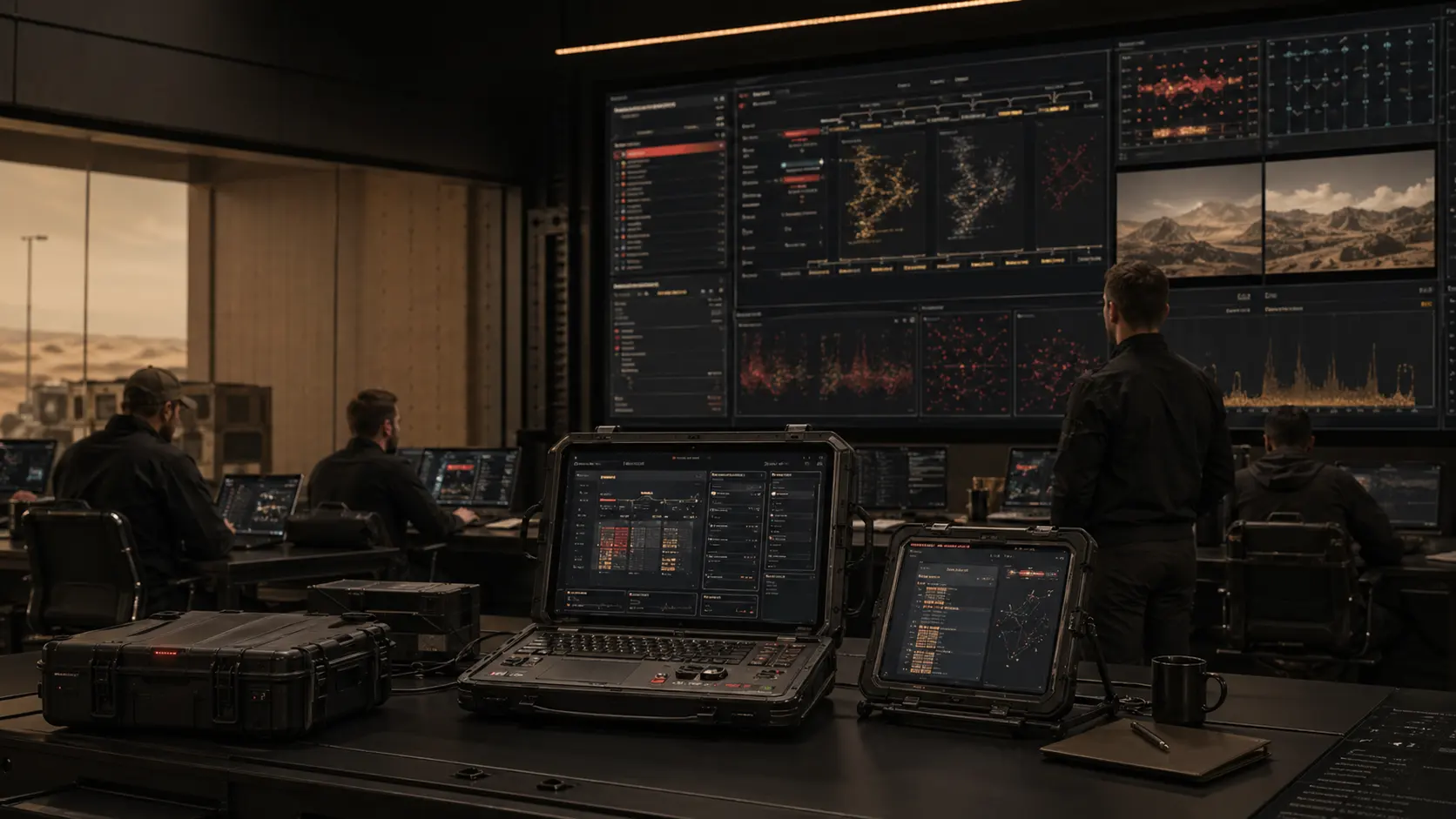
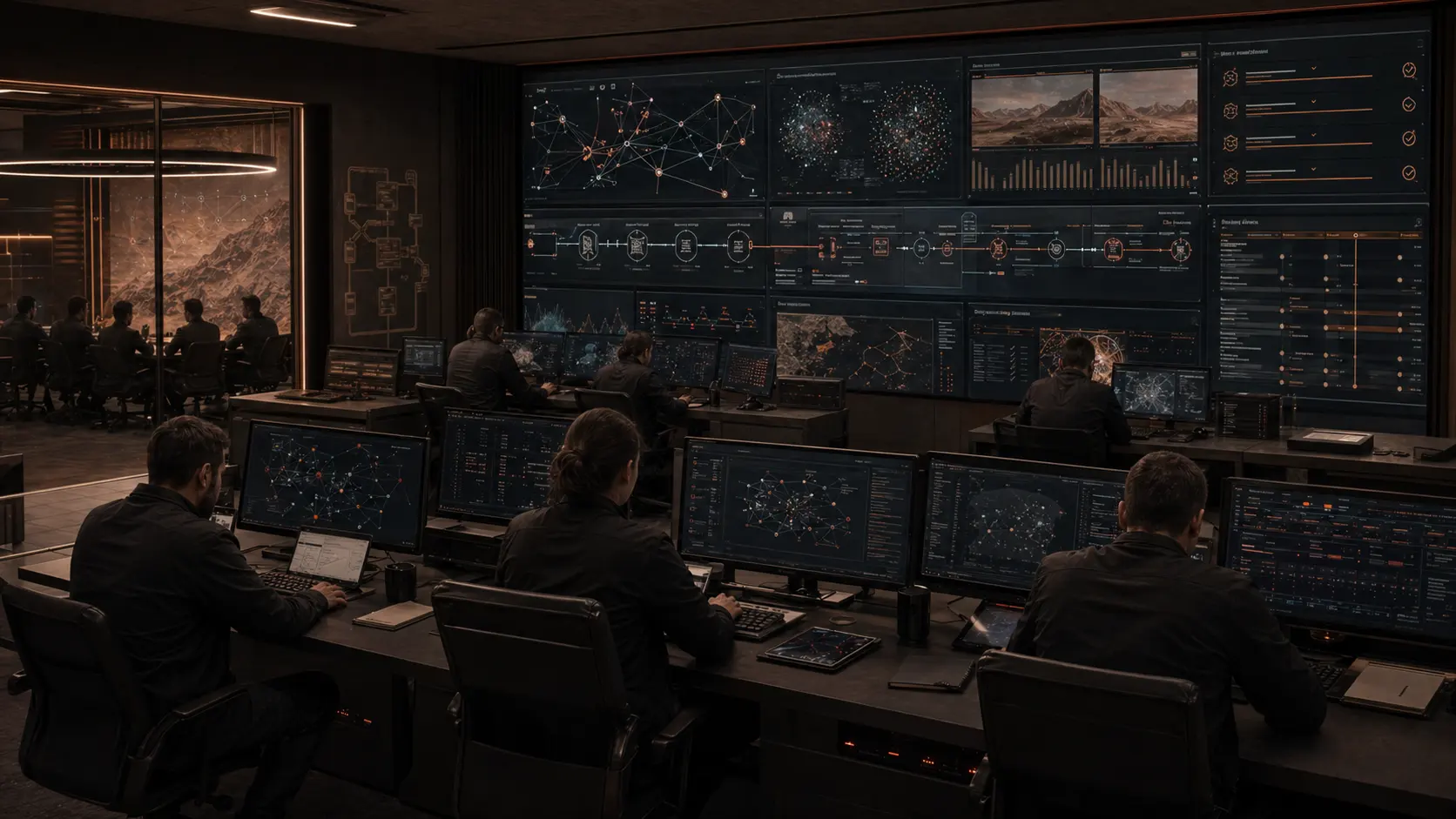
Mission systems integration lab with evidence workflow and research graph displays
Mission Systems Integration

Battle-harden AI systems into auditable mission workflows.

Starzl turns adversarial AI systems into mission workflows with modeled intent, trusted source material, bounded actions, stress-tested behavior, and retained evidence.

Implementation model

Mission systems integration starts with authority, evidence, and stress testing.

The important question is not whether agents can act. It is whether the system can show why they acted, what source material they used, and where human control applies.

Knowledge acquisition system displays with source video and evidence graph
Automated Knowledge Acquisition System

Knowledge Base

Build specialized corpora from authorized video, web, and source material, preserve provenance, and structure material so AI systems can reason over the right context.

  • Speech, visual, OCR, and speaker extraction
  • Summaries, chapters, and corpus packaging
  • Output for augmentation, training, and analysis
Software fitUse where the workflow depends on trusted domain knowledge.
Analysts evaluating model behavior and skill realignment workflows in a secure lab
Skill Realignment Suite

Model Behavior

Preview, measure, and export model behavior changes so open-weight systems are tuned to the mission without hiding capability tradeoffs.

  • Behavior profiles and repeatable recipes
  • Before-and-after evaluation against representative prompts
  • Export path for controlled model variants
Software fitUse when a program needs evidence that model behavior has been tuned and measured.
Mission control workstation with operator review tools and edge devices
Operator workflow

Human Review

Expose the mission model, source record, action log, and findings in an interface that supports review rather than hiding complexity.

  • Approval gates for sensitive steps
  • Inspectable records for sources and actions
  • Decision views for technical and leadership audiences
Software fitUse when operators need one review surface for mission intent, sources, actions, and findings.
Model
Intent

Goals, requirements, and constraints are defined before work begins.

Corpus
Context

Authorized source material becomes a structured, inspectable knowledge base.

Action
Bounds

Agent work is limited by tools, policies, and approval points.

Evidence
Logs

Outputs retain the source and action trail needed for review.

Review
Decision

Findings are packaged for procurement, operations, and technical risk owners.

Delivery model

Prototype the workflow, then harden it.

Mission systems integration turns a promising capability into a controlled workflow with evidence, test events, and hardening work.

01
Scope

Define mission objective, users, authorities, data boundaries, and review criteria.

02
Curate

Build the source corpus and preserve enough provenance for inspection.

03
Orchestrate

Connect agent actions to the mission model and constrain the available tools.

04
Evaluate

Run adversarial or operational scenarios and package findings for the next decision.

Mission systems integration operations room with evidence workflow displays
What to brief

Start from the objective, then prove the system under pressure.

The AI systems become easier to harden when they are framed as a workflow with owners, sources, allowed actions, logs, and acceptance criteria.

  • OwnerWho approves actions, handles exceptions, and accepts risk.
  • InputsMission brief, source corpus, operational constraints, tool permissions, and data boundaries.
  • EvidenceLogs, requirement links, source records, adversarial findings, and retained artifacts.