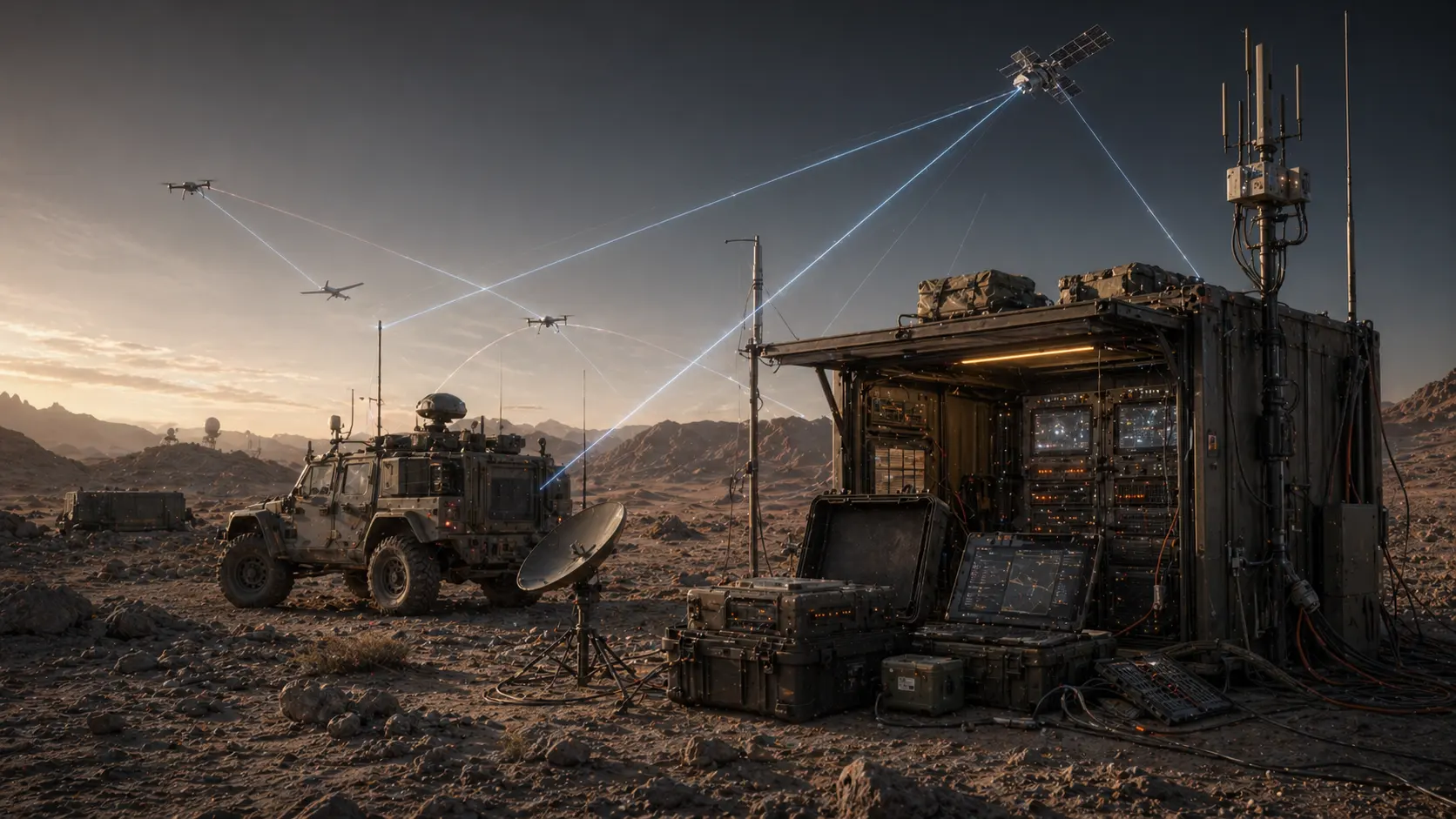

Forward edge spectrum deployment with tactical vehicle, communications shelter, antennas, rugged compute, and RF links
Quicksilver Edge & Spectrum

Quicksilver Edge & Spectrum.

Quicksilver is built around a practical premise — mission teams need to compress, classify, transport, secure, and orchestrate useful signal data when bandwidth, interference, storage, and edge power are all under pressure.

Signal path

One system for the edge spectrum path.

We field Quicksilver to create asymmetric advantage — reducing what must move, identifying what matters, keeping links usable, protecting high-rate data, and coordinating distributed edge assets.

01
Detect

Identify channels, anomalies, and signal classes close to collection.

02
Compress

Reduce IQ and phase-space data before storage or transport becomes the bottleneck.

03
Transport

Lower end-to-end bandwidth requirements and reduce time on air.

04
Survive

Maintain useful throughput under interference and poor link conditions.

05
Encrypt

Protect high-rate edge streams without unacceptable latency or power draw.

06
Orchestrate

Coordinate routes, nodes, and policies across distributed edge assets.

Compression
Edge IQ

Compression for IQ and phase-space data — targets on briefing.

Classification
Signal awareness

Signature extraction and signal classification near collection.

Transport
Resilient links

End-to-end bandwidth reduction across constrained links — targets on briefing.

Security
Edge throughput

Low-latency protection for high-rate edge streams — targets on briefing.

Orchestration
Distributed assets

Routing and network control across distributed edge.

Quicksilver functions

Five functions built to harden the spectrum path.

Quicksilver turns performance targets into test events that partners can run against real link, storage, edge-compute, and network-control pressure.

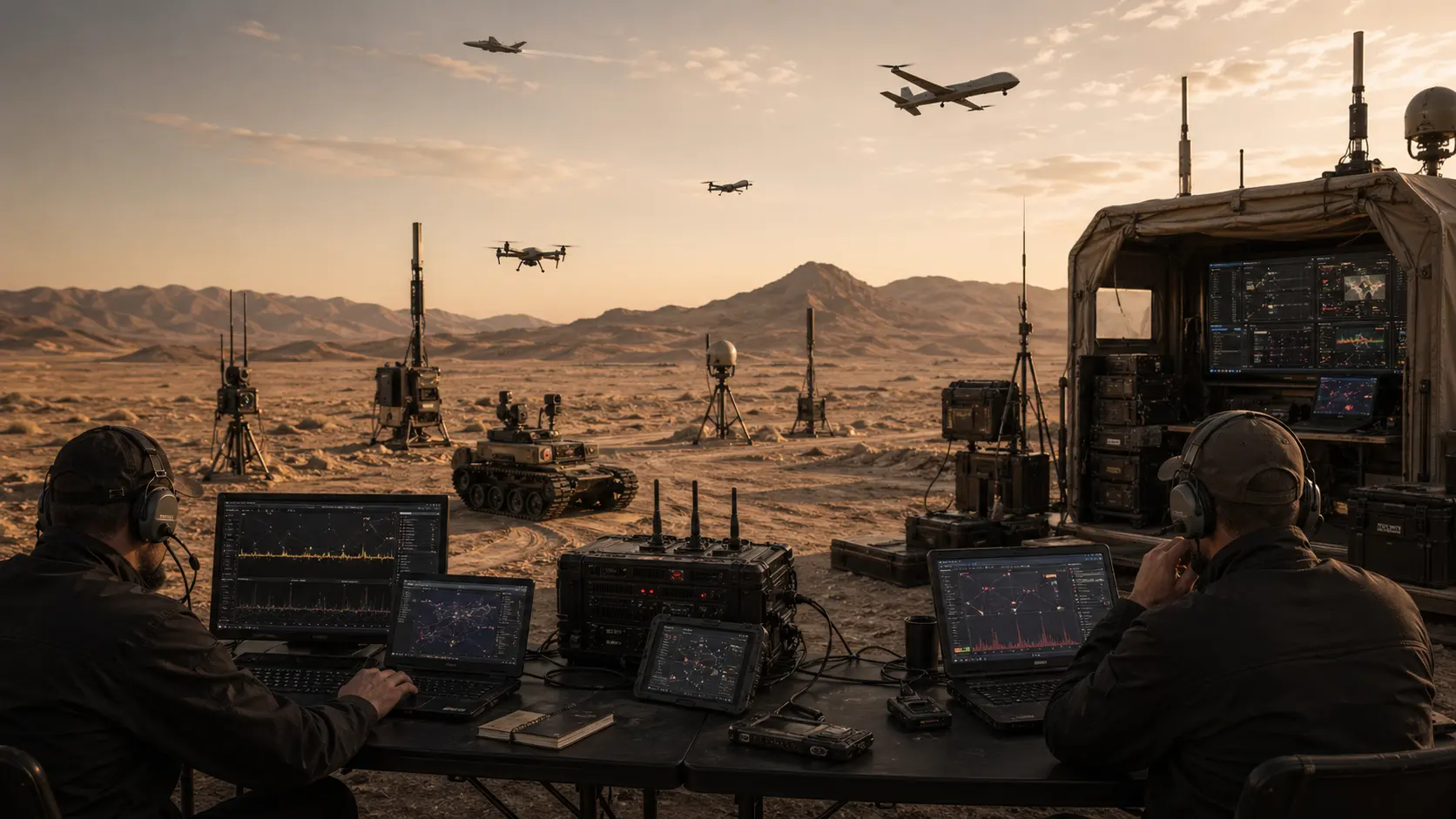
UAV and ground drone electronic warfare range with passive sensing and RF links
Quicksilver / Classification

Quicksilver Signal Classification

Signature extraction, signal classification, anomaly detection, and channel awareness — close to collection.

  • Signal signatures and class labels
  • Channel detection and anomaly surfacing
  • Operator view of what changed and what matters
Mission fitUse when teams need useful signal understanding before moving data.
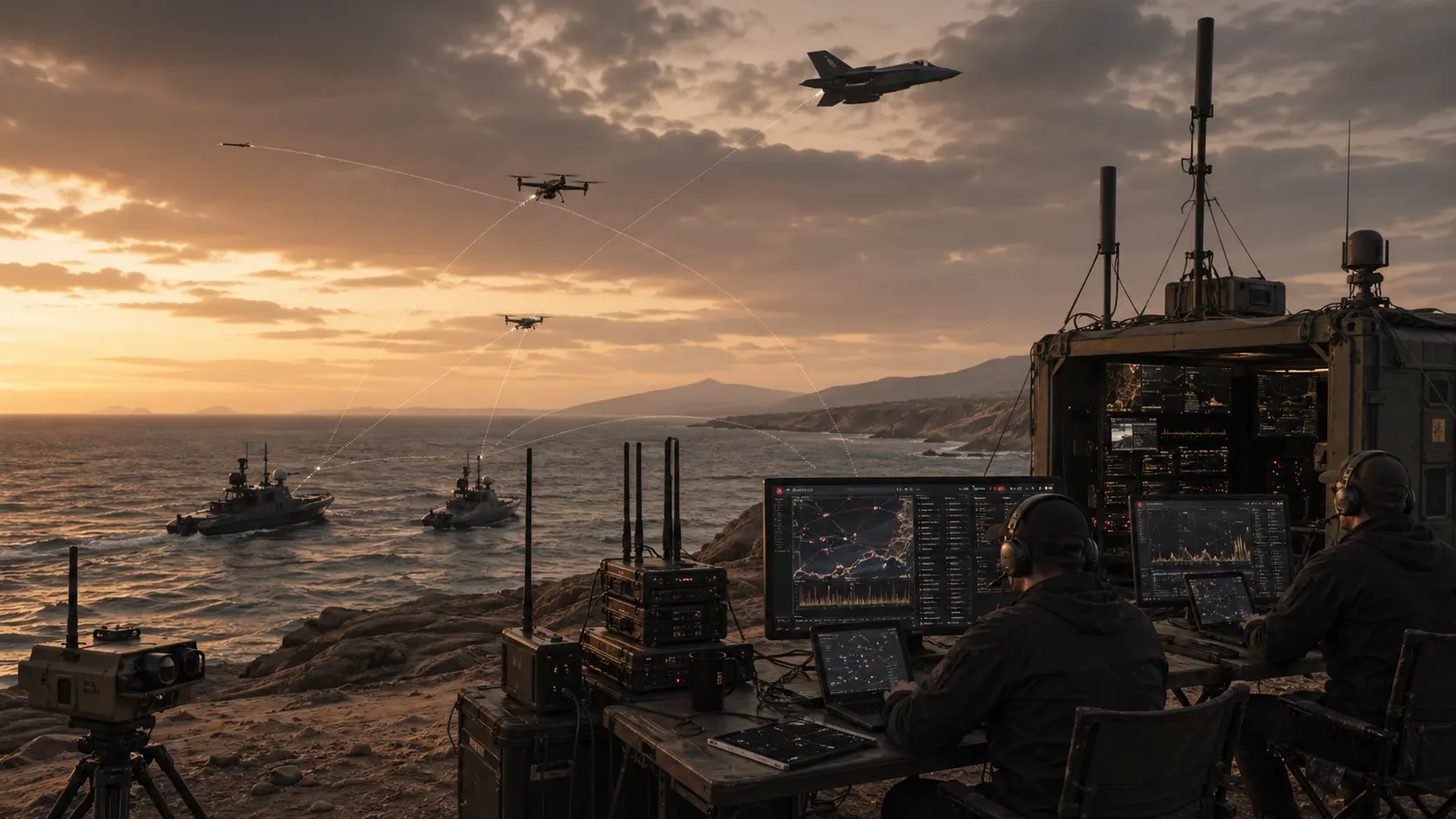
Maritime electronic warfare range with uncrewed surface vessels, UAVs, aircraft, and RF links
Quicksilver / Transport

Quicksilver Transport

Transport optimization for constrained links — lower duty cycle, higher effective throughput, and operation through degraded signal conditions.

  • Bandwidth-reduction performance against representative link conditions
  • Lower time on air for reduced detectability exposure
  • Defense, private network, and satellite backhaul fit
Mission fitUse when the link budget is limiting deployment.
Stand-off electronic warfare range with autonomous systems, aircraft, and telemetry links
Quicksilver / Security

Quicksilver Edge Security

Secure high-rate data and IQ sample paths for distributed radio architectures — without heavy latency or power penalties.

  • High-throughput protection sized to edge architectures
  • Low-latency operation under edge throughput pressure
  • Error containment for noisy or degraded environments
Mission fitUse when secure edge operation is as important as throughput.
Distributed UAV and ground drone electronic warfare test range with field spectrum nodes
Quicksilver / Orchestration

Quicksilver Network Orchestration

Network control, route coordination, and policy management for distributed edge assets — under changing link conditions.

  • Route and node coordination
  • Policy control for edge data movement
  • Operational view across separated assets
Mission fitUse when distributed assets need coordination under link pressure.
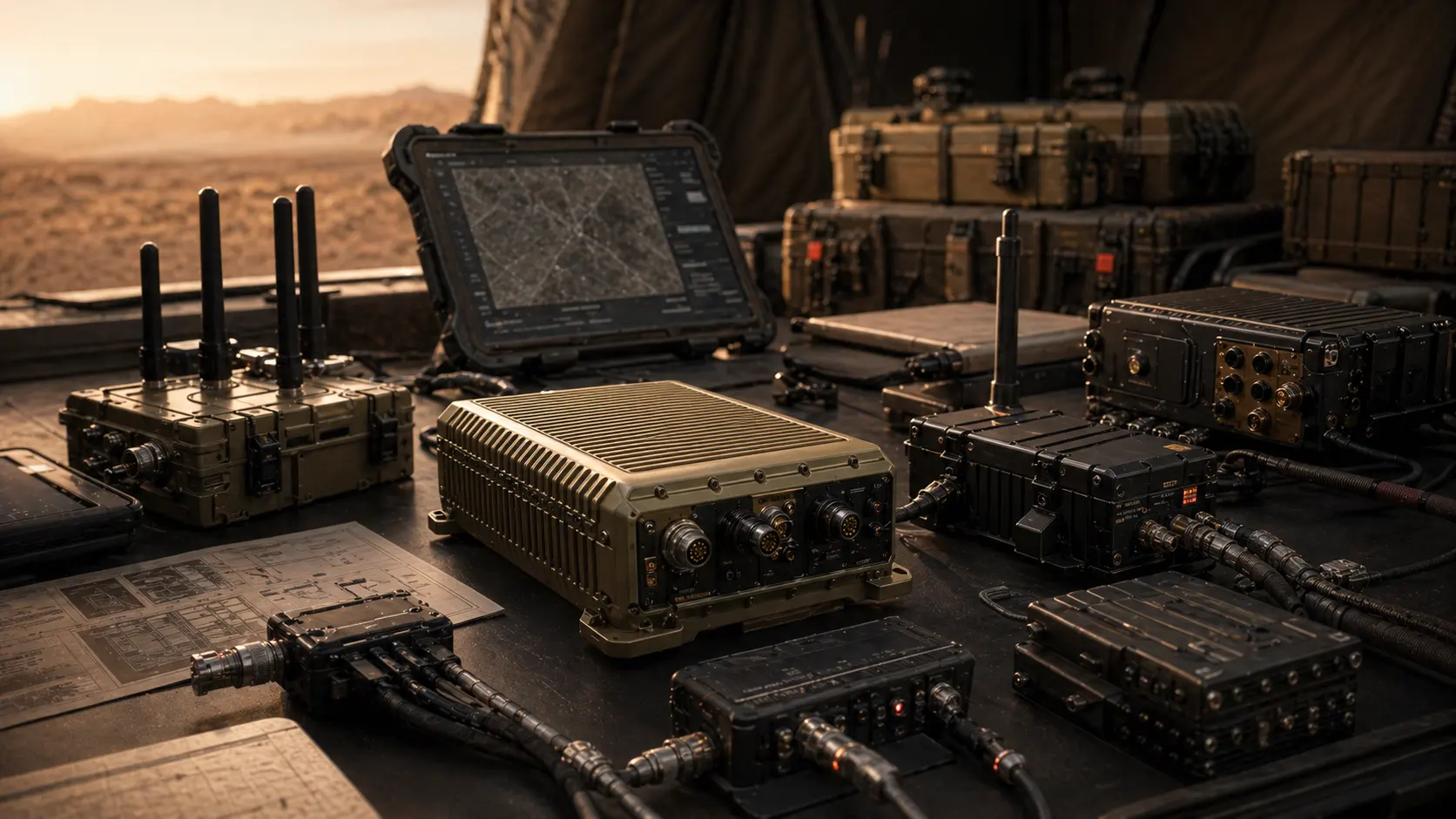
Rugged RF edge hardware, secure compute modules, antennas, cabling, and field cases arranged for evaluation
Operational impact

Efficiency

Quicksilver is built around low-SWaP operation, storage reduction, and bandwidth savings — effective use of existing infrastructure.

  • Power and compute envelope at the edge
  • Storage, transport, and backhaul burden
  • Cost and logistics impact for remote missions
Mission fitUse when the mission question is lifecycle cost and deployability.
Space domain awareness range with satellites, orbital tracks, ground sensors, and RF data paths
Operational impact

Distributed Architecture

Quicksilver Transport, Edge Security, and Network Orchestration point toward secure distributed radio, remote backhaul, and forward-deployed systems — built to work beyond clean infrastructure.

  • Distributed aperture and radio concepts
  • Secure data paths between separated assets
  • Performance targets for field hardening
Mission fitUse when a partner needs field architecture implications, not only component targets.
Space domain sensor range with phased-array radar, telescope domes, command vehicles, and orbital spectrum arcs
Field briefing

Stress test the link budget before deployment.

Briefings start from the operating constraint — what must move, what must remain encrypted, and what performance is required under interference.

  • DataIQ streams, phase observations, signal events, edge metadata, or compressed artifacts.
  • ConstraintBandwidth, storage, power, latency, duty cycle, jamming, or infrastructure access.
  • MeasureCompression ratio, reconstruction fidelity, effective throughput, latency, or operator utility.